
How Precast Concrete Streamlines Procurement and Reduces Material Coordination Challenges
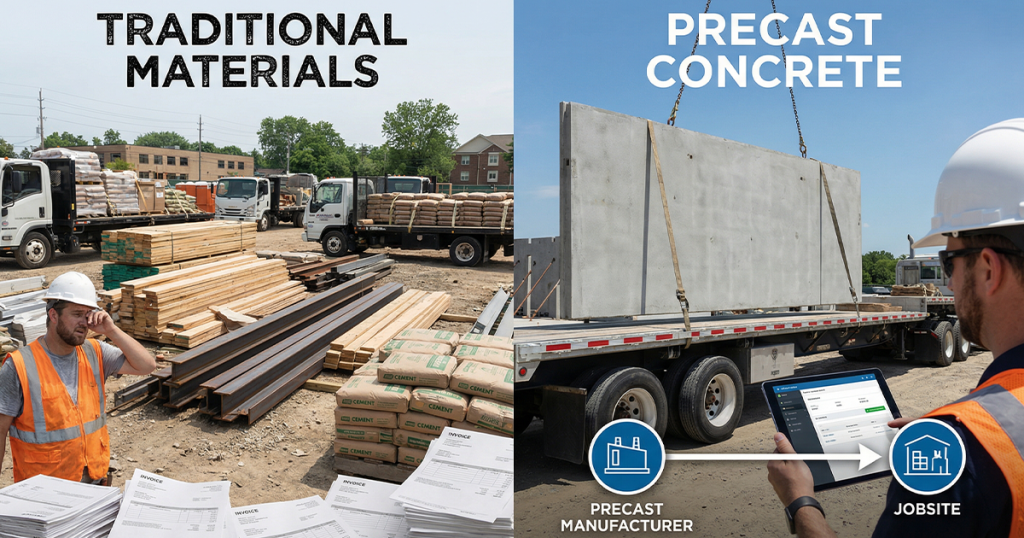
Why Procurement Complexity Slows Down Commercial Construction Procurement involves coordinating materials, managing orders, verifying specifications, and ensuring deliveries arrive at the right time. Traditional concrete increases procurement complexity because contractors must source rebar, formwork, mix materials, curing supplies, equipment, and finishing tools separately. Each item carries its own lead time, storage needs, and coordination challenges. […]
How Precast Concrete Improves Quality Assurance and Reduces On Site Risk for Commercial Builders
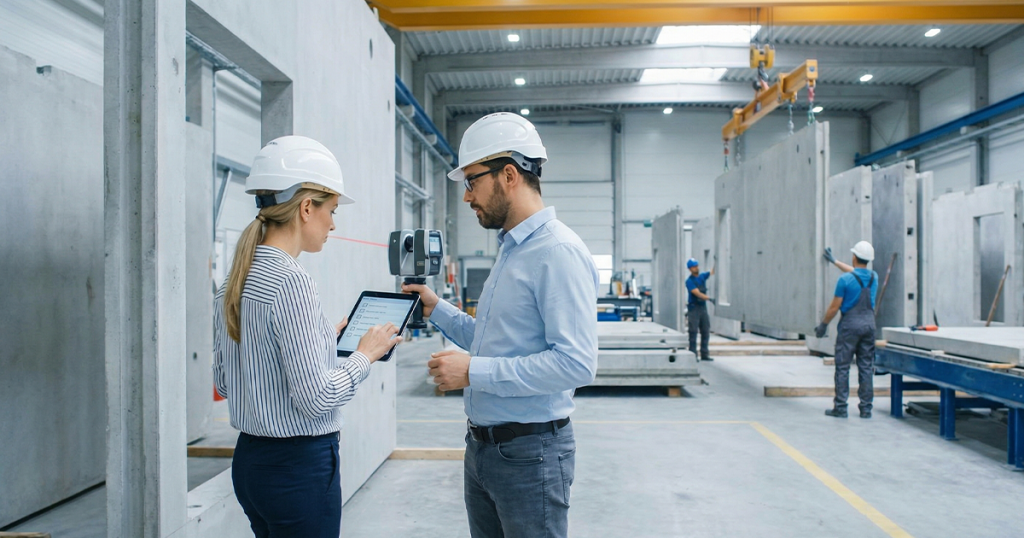
Why Quality Assurance Determines Project Success Quality issues create some of the most expensive and disruptive problems in commercial construction. When structural components fail to meet specifications, contractors face rework, schedule delays, safety concerns, and cost overruns. Traditional concrete introduces many unpredictable field variables that make quality control difficult. Precast concrete solves these issues by […]
Why Precast Concrete Reduces Design Revisions and Supports Cleaner Project Documentation
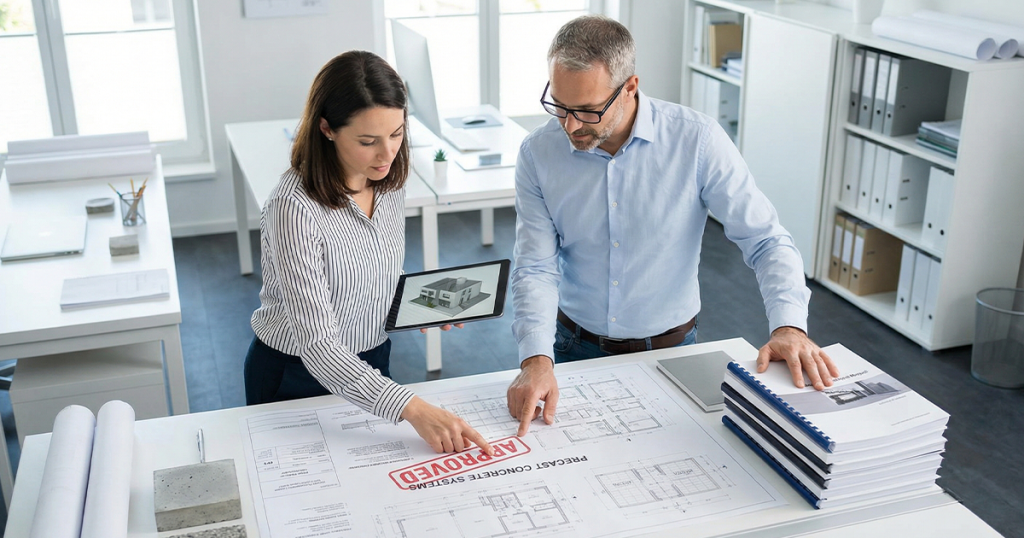
Why Design Revisions Slow Down Commercial Projects Design revisions create delays, increase costs, and force design teams to revisit plans after construction has already begun. These changes often result from field inconsistencies, unclear details, or unexpected conflicts between materials and drawings. Traditional site built concrete can introduce dimensional variations, unpredictable curing behavior, and formwork shifts […]
How Precast Concrete Simplifies Site Logistics and Reduces Jobsite Congestion
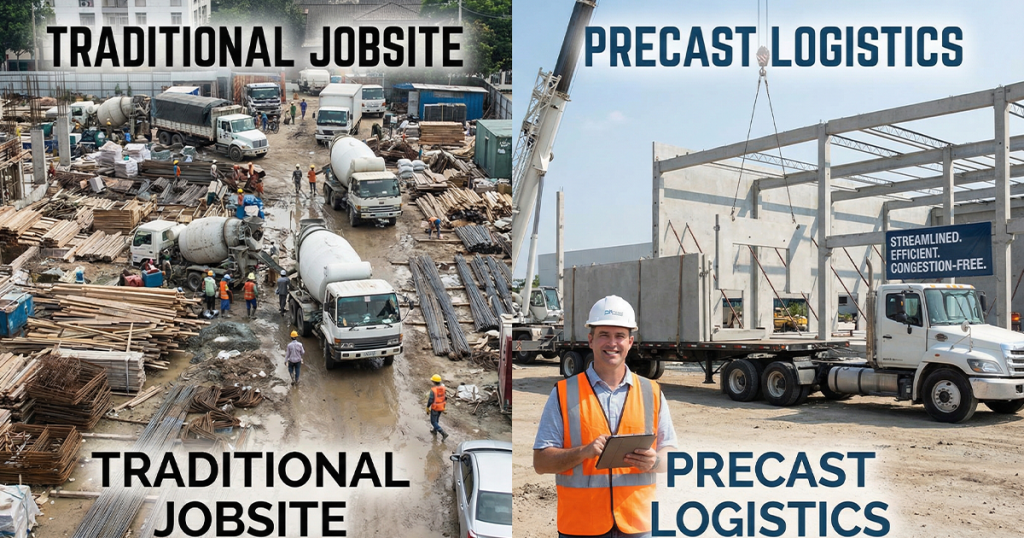
Why Jobsite Logistics Affect Every Part of a Commercial Project Jobsite congestion slows down deliveries, increases risk, and reduces productivity across all trades. When materials pile up, crews lose space to work, equipment becomes harder to maneuver, and staging areas get overwhelmed. Traditional concrete work adds more clutter because it requires formwork, rebar bundles, pour […]
How Precast Concrete Reduces Labor Requirements and Supports a More Efficient Workforce
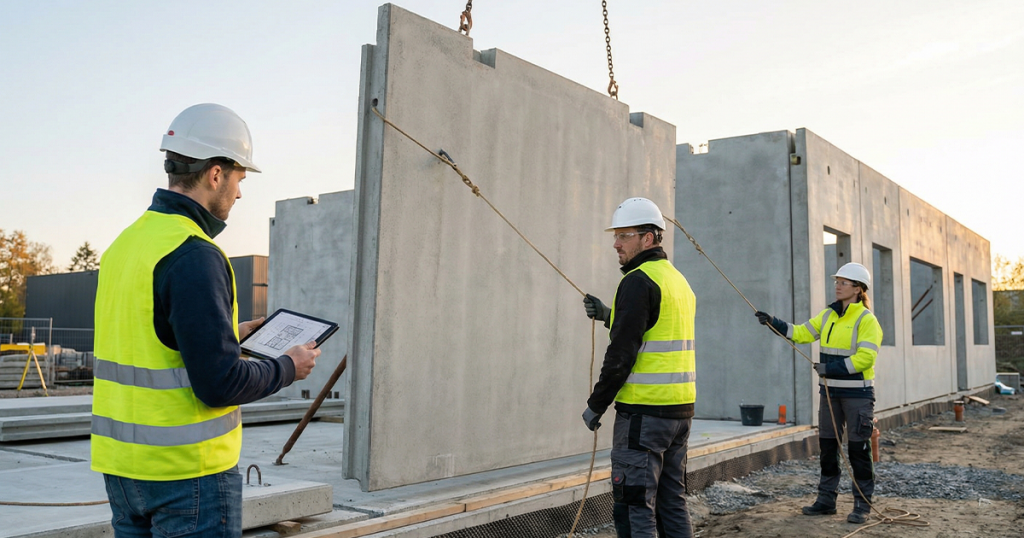
Why Labor Efficiency Drives Commercial Construction Success Labor shortages continue to affect commercial construction across the country. Skilled workers are harder to find, field crews are stretched thin, and projects face delays when key trades are unavailable. Traditional concrete work is labor intensive and requires large teams for forming, pouring, finishing, and curing. Precast concrete […]
Why Precast Concrete Speeds Up Project Scheduling for Developers and General Contractors
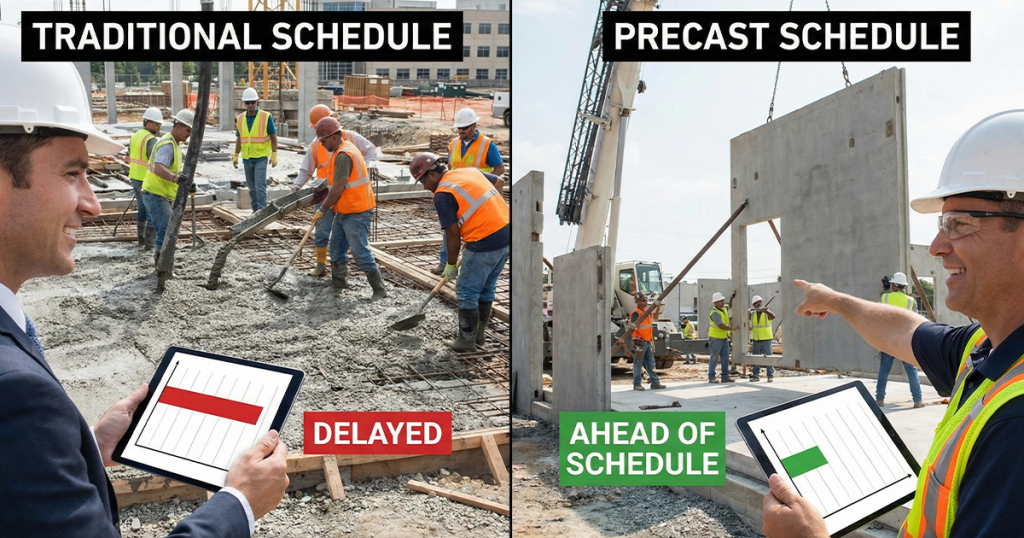
Why Developers Need Predictable Project Schedules Commercial construction schedules are complex, involving multiple trades, inspections, material deliveries, weather variables, and coordination across dozens of moving parts. Delays increase holding costs, extend financing timelines, frustrate tenants, and reduce overall project profitability. Precast concrete gives developers and general contractors far more control because the structural phase is […]
How Precast Concrete Simplifies Design Coordination for Architects and Engineers

Why Design Coordination Is Critical for Commercial Projects Architects and engineers rely on accurate dimensions, predictable material behavior, and clear structural data to design commercial buildings. When materials vary in performance or field conditions introduce unexpected changes, plans must be revised, details must be updated, and coordination becomes difficult. Precast concrete provides a stable, engineered […]
How Precast Concrete Improves Structural Longevity and Extends Building Lifespan
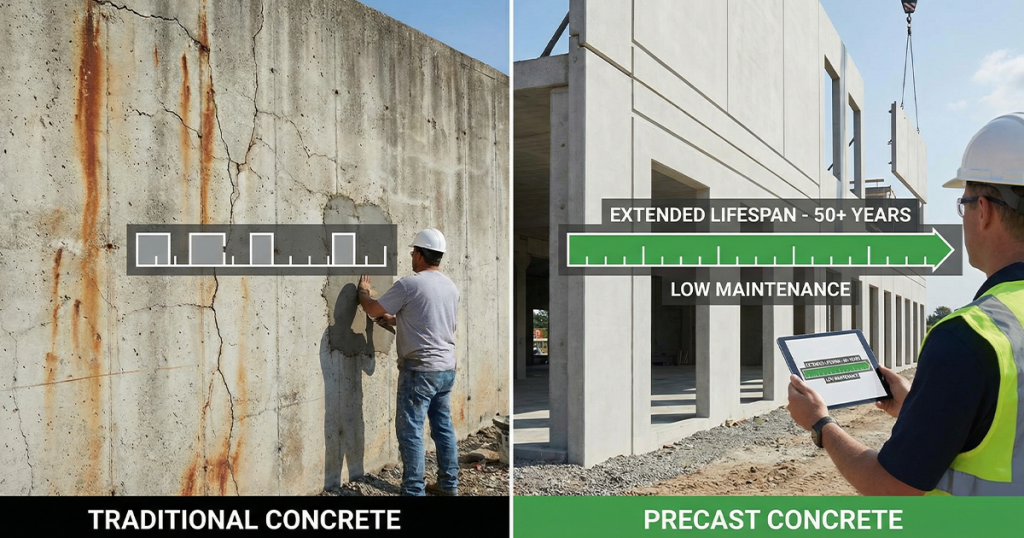
Why Longevity Matters in Commercial Construction Developers, investors, and owners want buildings that last decades with minimal structural issues. Long term performance directly impacts operating costs, asset value, and overall return on investment. Traditional construction methods often degrade faster due to weather exposure, inconsistent curing, and variable material quality. Precast concrete offers a predictable, engineered […]
Why Precast Concrete Provides Superior Acoustic Performance in Commercial Buildings
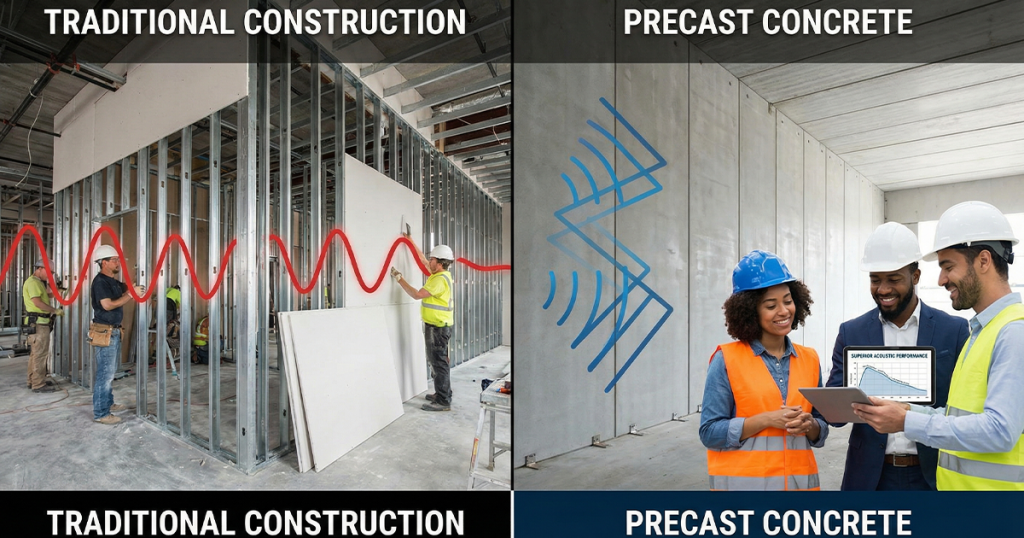
Why Sound Control Matters in Modern Construction Noise affects comfort, productivity, and privacy in commercial buildings. Schools need quiet learning environments. Offices require reduced noise transfer between workspaces. Multifamily housing must limit sound between units. Traditional lightweight materials often fail to block sound effectively, leading to complaints, poor tenant satisfaction, and costly retrofits. Precast concrete […]
How Precast Concrete Supports Better Thermal Performance and Energy Efficiency in Commercial Buildings
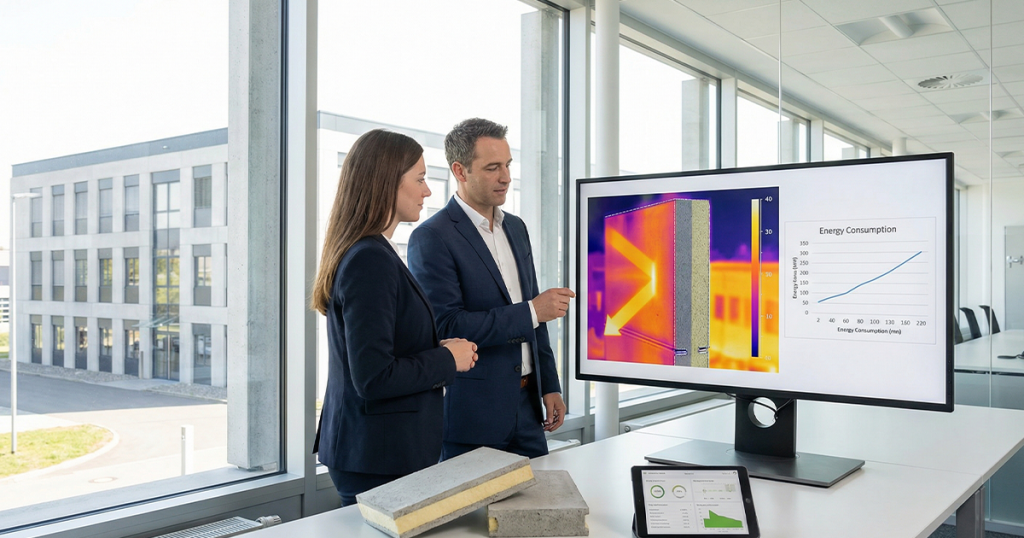
Why Energy Efficiency Matters for Modern Construction Commercial buildings consume significant energy for heating, cooling, and climate control. Owners want lower utility costs, better insulation, and building envelopes that maintain interior comfort year round. Traditional materials vary widely in thermal performance and often require additional insulation systems to meet modern standards. Precast concrete provides strong, […]