
How Precast Concrete Reduces Long Term Maintenance Costs for Commercial Buildings
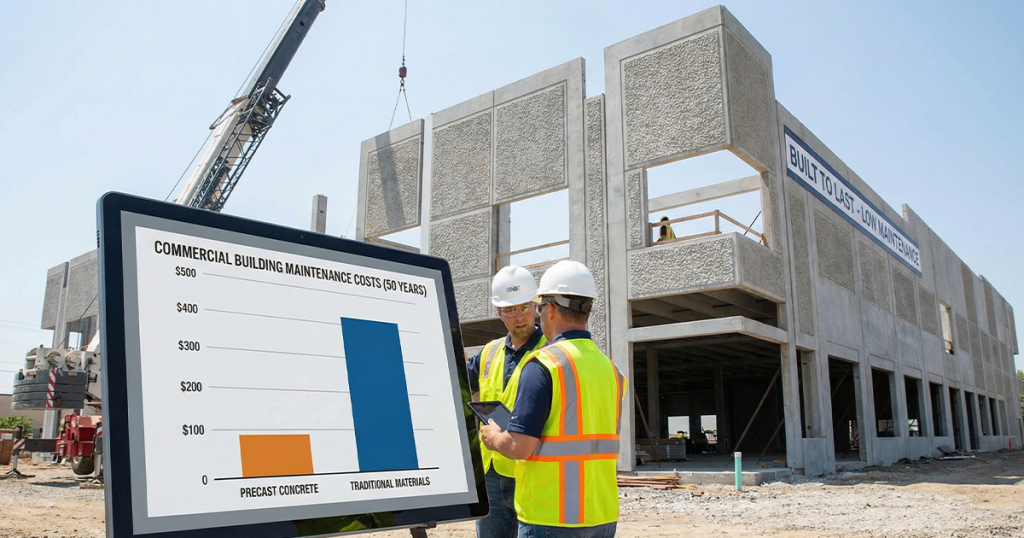
Why Maintenance Costs Matter in Commercial Construction Commercial buildings must stay functional, safe, and efficient for decades. Owners and operators consistently rank maintenance cost as one of the most important long term performance metrics. Materials that require constant repair, repainting, resealing, or reinforcement increase operational expenses and reduce profitability. Precast concrete provides a major advantage […]
How Precast Concrete Improves Moisture Control and Prevents Water Intrusion in Commercial Buildings

Why Moisture Problems Create Long Term Building Damage Water intrusion is one of the most expensive and disruptive issues in commercial construction. When moisture enters a structure, it can lead to mold growth, structural weakening, interior damage, and costly repairs. Traditional construction systems rely on multiple layers of membranes, sealants, and exterior finishes that can […]
How Precast Concrete Improves Wind Load and Storm Resistance in Commercial Construction

Why Wind Load Performance Matters for Modern Buildings Commercial buildings must withstand high winds, storm events, and pressure changes that can compromise structural stability. Traditional building methods often require additional reinforcing, bracing, or retrofit solutions to meet code. Precast concrete provides inherent strength, mass, and rigidity that help resist wind pressure without relying on complex […]
How Precast Concrete Enhances Fire Resistance and Improves Commercial Building Safety
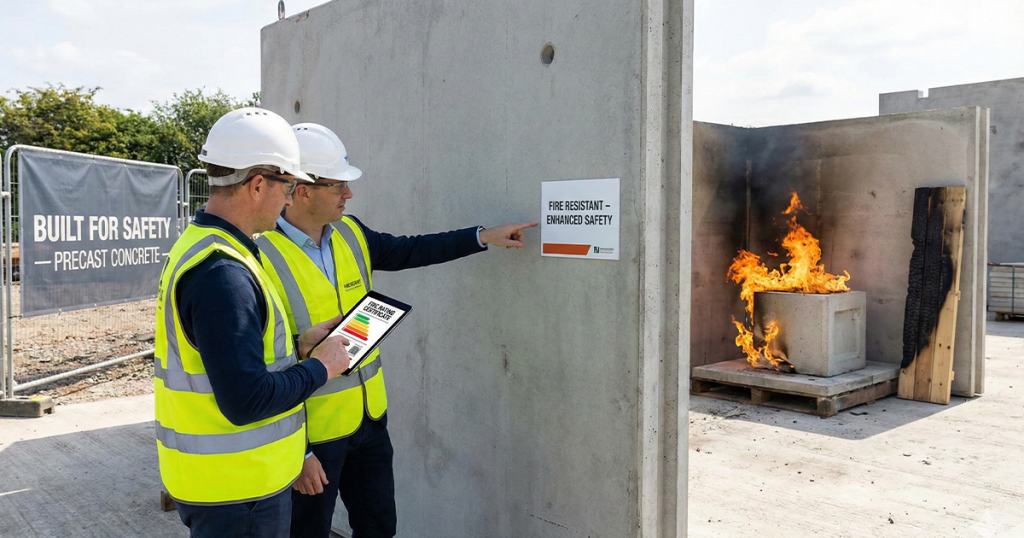
Why Fire Resistance Is a Critical Factor in Commercial Construction Fire safety is one of the most important engineering and compliance requirements in commercial building design. Developers, architects, and engineers must meet strict fire ratings that protect occupants, minimize damage, and ensure structural stability under extreme heat. Traditional construction materials vary widely in fire performance, […]
How Precast Concrete Supports Safer Jobsites and Reduces Construction Risk
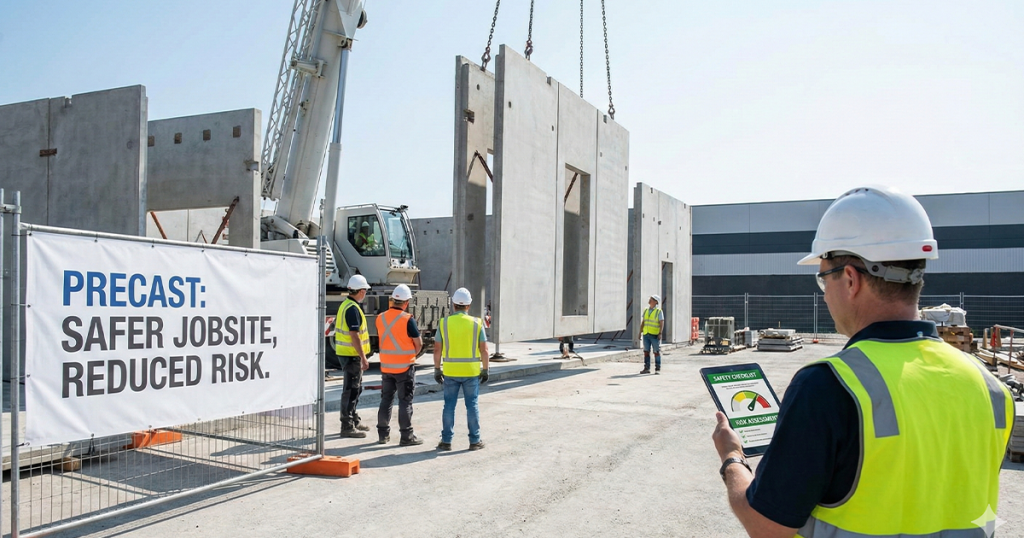
Why Safety Drives Every Commercial Construction Decision Safety is one of the most important factors on any commercial jobsite. Accidents slow down schedules, increase insurance costs, and create unnecessary risk for workers and contractors. Traditional concrete work requires heavy manual labor, elevated forms, crowded work areas, and constant site adjustments. Precast concrete reduces these hazards […]
Why Precast Concrete Reduces Rework and Punch List Items on Commercial Projects

Why Rework Is One of the Most Expensive Construction Problems Rework affects budgets, timelines, and coordination across every trade. When mistakes happen in the structural phase, the impact extends far beyond the concrete crew. MEP contractors have to redo connections, framers adjust openings, inspectors request corrections, and the overall schedule slides. Traditional concrete is especially […]
How Precast Concrete Improves Inspection Speed and Simplifies Quality Control
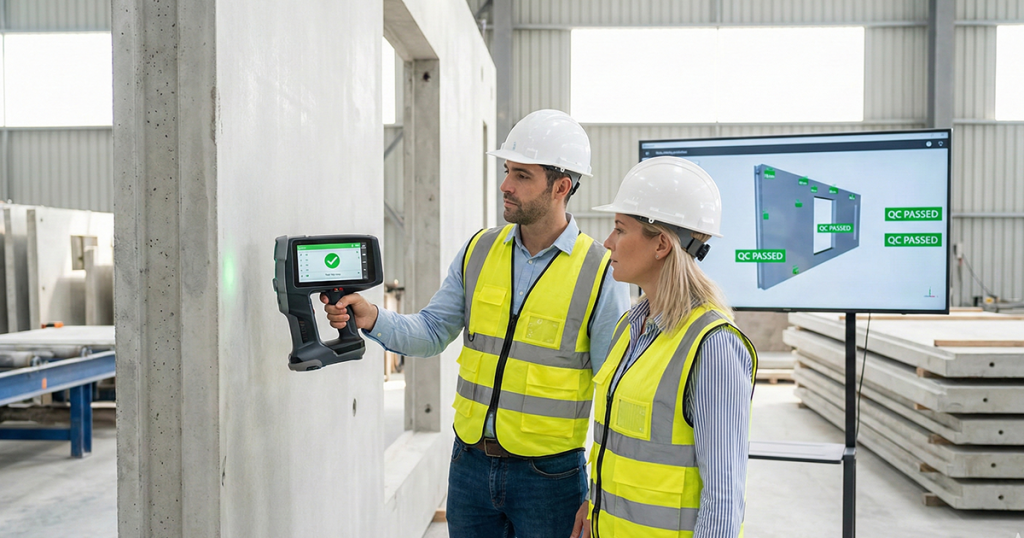
Why Inspections Slow Down Commercial Projects Inspections are necessary, but they often become major sources of delay. Traditional concrete requires multiple inspection points for formwork, rebar placement, mix verification, pour conditions, and curing progress. If any step fails inspection, crews must stop, correct the issue, and wait for another review. These delays affect every trade […]
Why Precast Concrete Improves Coordination Between Trades on Commercial Jobsites
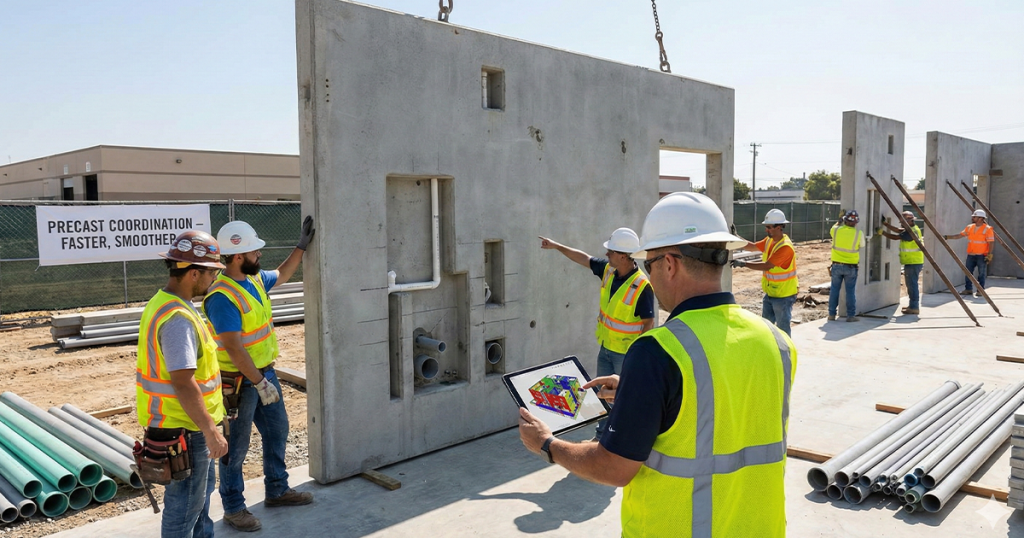
Why Trade Coordination Shapes the Whole Project Most delays in commercial construction happen when trades overlap, interfere with one another, or cannot access the areas they need. When schedules shift, every contractor feels the impact. Precast concrete improves coordination because it creates a predictable structural timeline that helps all trades plan ahead with clarity. The […]
Understanding the Timeline Savings Precast Concrete Creates for Commercial Builders
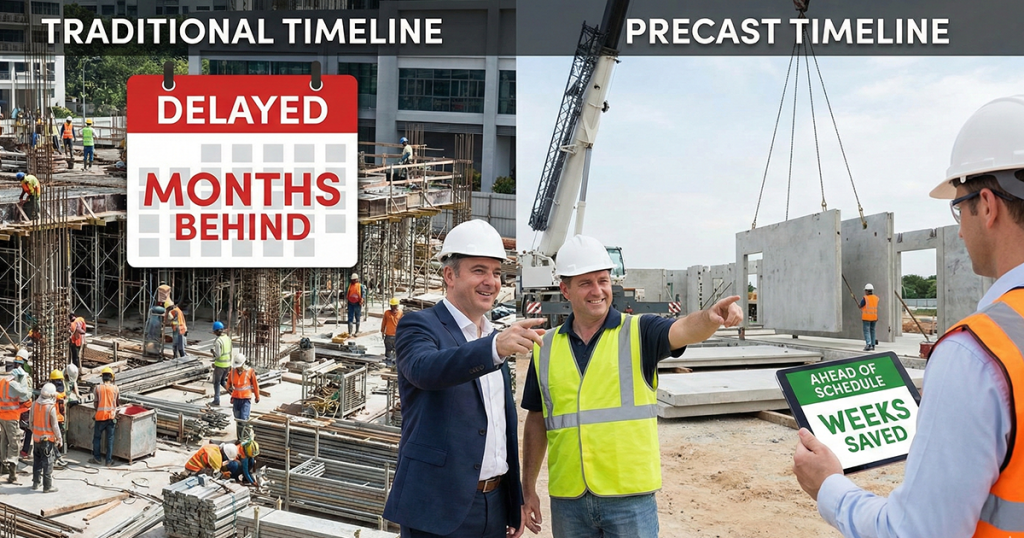
Why Construction Timelines Need More Predictability Commercial projects often fall behind because of weather conditions, material delays, labor shortages, and inspection bottlenecks. Traditional concrete depends heavily on outdoor variables and long curing periods, making schedules harder to control. Precast concrete solves this by shifting the most time consuming steps off site, allowing builders to compress […]
How Precast Concrete Creates Cleaner, Safer, and More Productive Jobsites
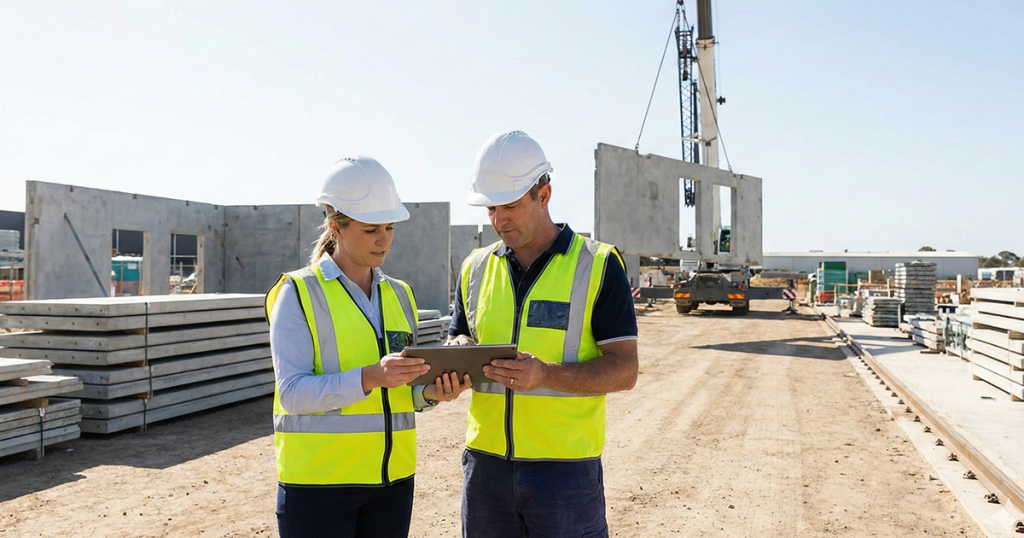
Why Jobsite Conditions Affect Project Performance Clean jobsites are more efficient, safer, and easier to manage. When a site is cluttered with debris, forming materials, rebar, tools, and equipment, productivity drops and risks increase. Traditional concrete creates heavy site congestion because so much work happens on the ground. Precast concrete changes that dynamic completely by […]